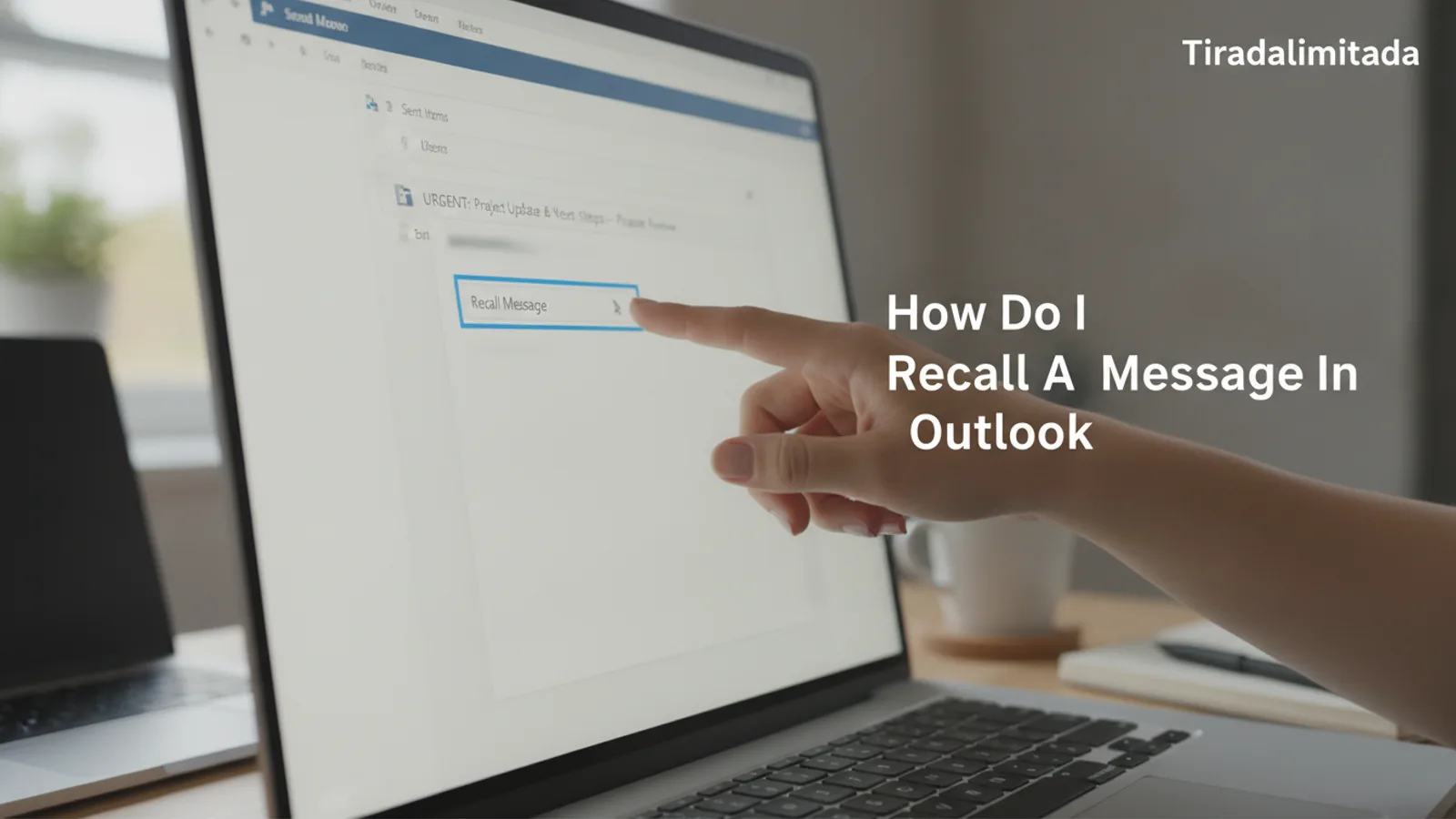
How Do I Recall A Message In Outlook
A practical step-by-step guide to how do i recall a message in outlook, including preparation, instructions, common issues, tips, and next steps.
How Do I Recall A Message In Outlook
This guide explains how to approach how do i recall a message in outlook, including the preparation, practical steps, common mistakes, and final checks that help you finish with confidence.
Before You Start
Step-by-Step Instructions
Quick Reference
Common Problems When You Recall A Message In Outlook
Recalling an email in Outlook isn't always guaranteed to work. Many factors can lead to a recall failure. Understanding these common problems can help you manage expectations and plan your next steps.
Problem 1: Recipient Has Already Opened the Message
This is the most frequent reason for a recall failure. If the recipient has already opened your email before the recall message arrives in their inbox, the recall attempt will fail. The original message will remain in their inbox, and if you chose to replace it, they might see both the original and the replacement message.
Fix: If this happens, the best course of action is to send a follow-up email explaining the mistake or providing the corrected information. A simple, polite email apologizing for the error and clarifying the correct details is often the most effective solution.
Problem 2: Not Using an Exchange Account or Outlook Desktop App
The "Recall This Message" feature is specifically designed for email accounts hosted on a Microsoft Exchange server and accessed through the full Outlook desktop application. If you are using a personal email account (like Outlook.com, Hotmail, Gmail, Yahoo Mail) or accessing your email through a web browser (Outlook on the web) or a mobile app, this recall function will not be available.
Fix: Confirm your email account type and ensure you're using the Outlook desktop application. If you're on a web version, some providers offer an "Undo Send" feature, but it's usually a short delay after sending, not a true recall. For non-Exchange accounts, a direct follow-up email is the only way to correct a sent message.
Problem 3: Recipient is Not Using Outlook or on a Different System
For the recall to work, both you and the recipient generally need to be on the same Exchange email server and using the Outlook desktop client. If the recipient is using a different email client (like Gmail, Apple Mail, Thunderbird) or a different email server, the recall will likely fail. In such cases, the recipient's email system will simply treat the recall message as a regular email, often displaying it as an "attempt to recall" notification, but not deleting the original.
Fix: As with other failures, a direct, clear, and polite follow-up email is the standard professional way to correct mistakes or retract information when a recall is not possible or has failed.
Problem 4: Message Moved from Inbox
If the recipient has set up rules that automatically move incoming messages to other folders (like an archive, a specific project folder, or junk mail) before the recall message arrives, the recall may fail. Outlook's recall typically targets the inbox.
Fix: There's no direct fix on your end for this. The best approach is to communicate with the recipient directly if the information was critical or sensitive. Explain the situation and provide the correct details.
Problem 5: Permissions or Technical Glitches
Less commonly, technical issues with the server, network delays, or specific permissions settings within an organization could interfere with a recall attempt. While rare, these can prevent the recall from processing correctly.
Fix: If you consistently experience recall failures in an organizational setting and are certain all other conditions are met, you might need to contact your IT support or email administrator for assistance. For individual instances, again, a direct follow-up email is usually the most practical solution.
Advanced Tips for How Do I Recall A Message In Outlook
While the recall feature is useful, preventing the need for a recall in the first place is even better. Here are some advanced tips to help you manage your emails more effectively and mitigate the risk of sending unintended messages.
1. Delay Sending All Messages
Outlook has a built-in feature that allows you to delay sending all your outgoing emails by a set amount of time. This gives you a crucial window to review your messages in the "Outbox" and catch mistakes before they actually leave your computer. This isn't a recall, but a proactive delay.
This creates a safety net, allowing you to quickly open your Outbox and delete a message if you immediately spot an error after hitting send.
2. Use "Undo Send" in Outlook on the Web
If you primarily use Outlook on the web (through a browser), the traditional "Recall This Message" feature isn't available. However, Outlook on the web offers an "Undo Send" option, which works differently. It essentially holds your message for a short period (up to 10 seconds, configurable) after you click send, allowing you to cancel it before it truly goes out.
This provides a very brief window to catch immediate errors, similar to Gmail's undo send feature.
3. Review Before Sending (The Manual Method)
This might seem basic, but it's the most effective preventative measure. Before hitting the "Send" button on any important or sensitive email:
A quick, deliberate review can prevent the need for a recall altogether.
4. Save Drafts for Sensitive Emails
For highly sensitive or complex emails, consider writing them, saving them as a draft, and then coming back to review them later with fresh eyes. This allows you to catch errors you might miss when writing in a hurry. You could even ask a colleague to review it if appropriate.
5. Utilize Private or BCC Fields Wisely
If you're sending an email to a large group where recipients don't need to see each other's addresses, use the BCC (Blind Carbon Copy) field instead of CC. This protects privacy and prevents "reply-all" storms. If you send an email with a BCC mistake, a recall will be harder to manage across many recipients, so getting it right the first time is crucial.
How Do I Recall A Message In Outlook FAQ
Q: Can I recall a message sent to a Gmail address?
A: No, typically you cannot. The Outlook "Recall This Message" feature only works when both the sender and recipient are using Outlook with an Exchange account on the same server. Messages sent to external email services like Gmail, Yahoo, or other non-Exchange accounts cannot be recalled using this method. Your best option is to send a follow-up email explaining the mistake or sending a corrected version.
Q: How long do I have to recall a message?
A: Technically, you can attempt to recall a message at any time after sending it. However, the recall is only effective if the recipient has not yet opened the message. The sooner you attempt the recall, the higher your chances of success. Once the message is opened, the recall will fail, and the recipient will likely still see the original email (and possibly a recall notification).
Q: What does the recipient see if I recall a message?
A: It depends on several factors:
Q: Can I recall a message on Outlook web or mobile?
A: No, the "Recall This Message" feature is only available in the full Outlook desktop application when connected to an Exchange account. Outlook on the web offers an "Undo Send" feature that gives you a short window (e.g., 5-10 seconds) to cancel a send immediately after clicking the button, but this is different from a true recall of an already delivered message.
Q: What if I didn't get a success or failure report?
A: If you checked the box to be notified and didn't receive a report, it could be due to several reasons, including server delays, or the recall attempt failing very early in the process. Without a report, you should assume the recall was not successful and proceed as if the recipient still has the original message. Consider sending a direct follow-up message to clarify or correct the information.
Q: Is recalling a message always a good idea?
A: Not always. If the recall fails, the recipient might see both the original message and a "recall attempt" notification, which can sometimes draw more attention to your mistake than a simple, polite correction email would. For minor errors, a quick, clear follow-up email is often less confusing and more professional than a failed recall. Use recall for truly critical errors or highly sensitive information where the message absolutely must be retracted before viewing.